Spring Storms in Fulton County: Preparing Your Home for Flooding
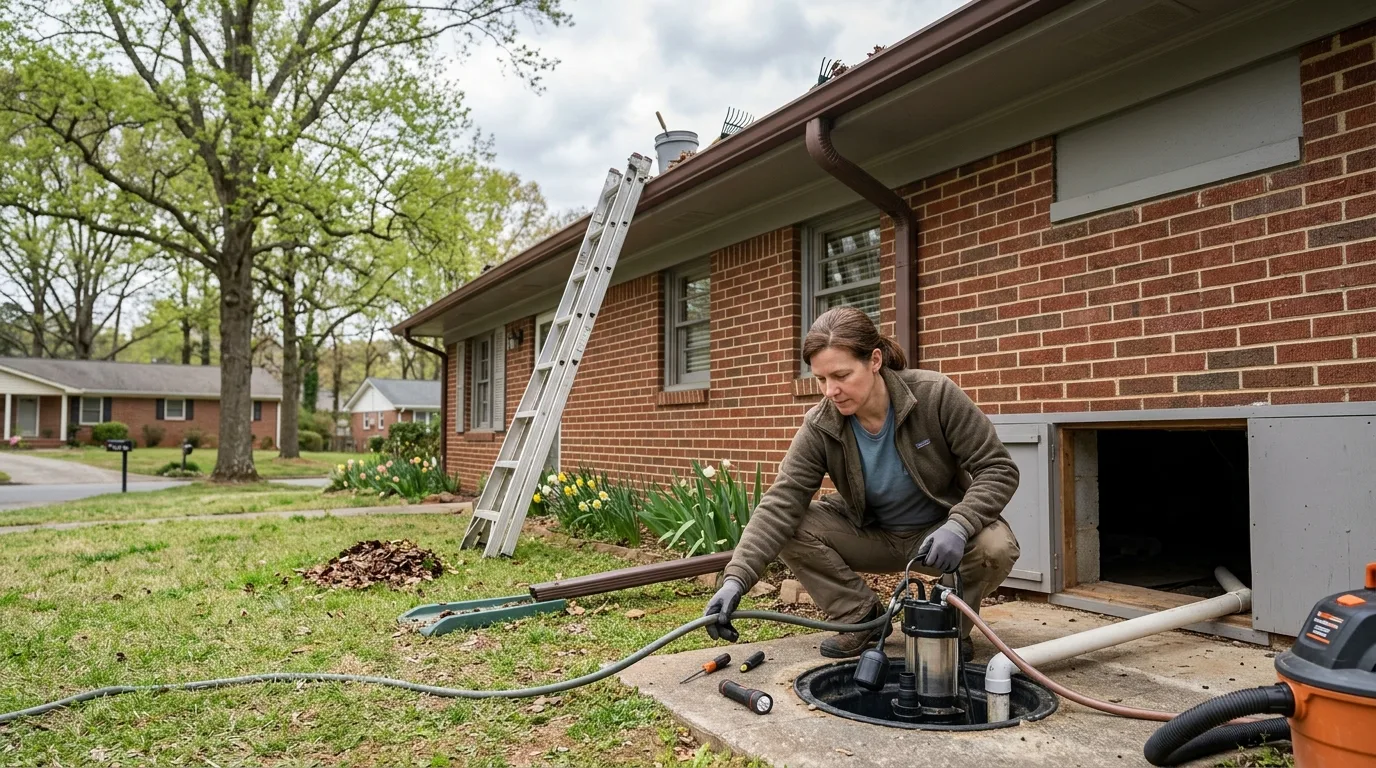
March arrives in Fulton County, and with it comes East Point’s most active water damage season. Spring and summer thunderstorm season runs from March through August, and East Point’s position in Georgia’s inland weather pattern means this city absorbs some of the most intense rainfall events in the Atlanta metro area. For homeowners in Cherry Blossom, DeLowe-Connally, and neighborhoods throughout East Point, this is the window that decides whether their home stays dry or becomes a restoration call. This post covers how to prepare your East Point home before spring flooding season, what the local risk factors are, and what to do when flooding happens despite preparation. In this post, we cover the spring storm risk profile, home preparation steps, what to do when flooding occurs, and post-storm inspection priorities.
Flood Damage in East Point After a Spring Storm?
24/7 emergency flood cleanup across East Point, College Park, Forest Park, and all of Fulton County. Call (877) 698-1311.
East Point’s Spring Storm Risk Profile
East Point’s spring thunderstorm season generates more water damage restoration calls than any other time of year. The combination of intense rainfall events — which can deliver 2–4 inches per hour during severe thunderstorms — and the city’s expansive red clay soil that holds water against foundations creates conditions where even homes in good repair can experience flooding if drainage systems become overwhelmed.
Fulton County’s storm patterns are influenced by the city’s position between Georgia’s coastal moisture sources and Appalachian weather systems. Cold fronts colliding with Gulf of Mexico moisture produce the severe thunderstorm events that track through the Atlanta metro during spring. East Point, at the southern edge of the metro area, is directly in this weather corridor. The National Centers for Environmental Information (NCEI) identifies Georgia as one of the highest-risk states in the Southeast for weather-related property damage, and Fulton County’s residential density amplifies that risk.
East Point averages over 50 inches of annual rainfall — nearly 12 inches above the national average of 38 inches. February is the wettest month with an average of 4.5 inches, and the spring and summer months maintain consistently high rainfall. Homes near Connally Nature Park, Sumner Park, and drainage corridors feeding the city’s stormwater system face the highest external flooding risk from these events.
Pre-Season Home Preparation: What to Check Before March
Gutter and downspout inspection: Gutters that are clogged with debris from fall and winter funnel roof runoff directly against your foundation rather than directing it away from the home. Clean gutters in late February before the heavy rain season begins. Downspouts should extend at least 4–6 feet from the foundation before discharging. This is one of the highest-impact, lowest-cost preparations you can make for spring flooding season.
Foundation crack inspection: Walk the perimeter of your home’s foundation and inspect for new or widened cracks. East Point’s red clay soil swells during winter wet periods, and cracks that weren’t visible in fall may have opened over winter. Cracks wider than 1/8 inch should be assessed by a professional — these are active water entry points during spring storms.
Sump pump test: If your East Point home has a sump pump, test it before spring storm season by pouring water directly into the sump pit until the float triggers the pump. Verify that water is actually being discharged away from the foundation. Sump pump failure during a spring storm is one of the most common causes of basement flooding in Fulton County.
Grading assessment: The ground around your foundation should slope away from the structure at 6 inches of drop over the first 10 feet. Grade that slopes toward the foundation directs roof runoff and stormwater against the foundation wall. Correcting grade with topsoil is a straightforward DIY task that significantly reduces basement and crawlspace flooding risk.
Window well inspection: Basement window wells without covers or with clogged drainage accumulate rainwater that forces its way through basement window frames during heavy rain events. Covers with center peaks allow water to shed away while preventing debris accumulation.
Spring Storm Flooding in Your East Point Home?
Fast flood cleanup response 24/7. Call (877) 698-1311 for East Point, College Park, Hapeville, Forest Park, Riverdale, and Fairburn.
During a Storm: What to Watch and When to Act
During an active thunderstorm event, homeowners should monitor several areas of their property:
Sump pit water level: If water is rising rapidly in the sump pit and the pump is running continuously, a power outage or pump failure during the storm can overwhelm the system quickly. Consider a battery backup sump pump system for this scenario.
Floor drains: During heavy municipal stormwater events, Fulton County’s combined storm and sewer system can surcharge, pushing water back through floor drains. If you see water appearing at floor drains during a storm with no apparent internal source, this is a sewer surcharge event. Backflow prevention devices installed on floor drains prevent this, but many older East Point homes in the Cherry Blossom and Center Park areas don’t have them.
Basement windows and foundation wall base: Water seeping at the base of foundation walls or around window frames during heavy rain is evidence of active water intrusion. Place sandbags at doorways to minimize entry until the storm subsides, then call for professional assessment.
After the Storm: Inspection Priorities
Once the storm has passed, a systematic post-storm inspection helps identify water intrusion before secondary damage sets in. East Point homeowners should check:
-
Crawlspace (if accessible): Look for standing water, wet soil, or moisture on floor joists with a flashlight. Any standing water in a crawlspace requires immediate professional response — see our flood damage cleanup services in East Point.
-
Basement corners and wall bases: New water staining, damp concrete, or standing water.
-
Ceiling directly under roof penetrations: Skylights, chimney flashing, plumbing vents, and HVAC penetrations are common entry points for roof leak water.
-
Window wells: Check for standing water that hasn’t drained.
-
Garage and lower-level entries: Grade-level entries are common flood entry points during heavy rain.
For comprehensive flood damage response, see our water damage restoration complete guide for East Point. For insurance claim guidance, see our Fulton County water damage insurance claim guide.
The Cost of Not Preparing
The cost of spring storm flood cleanup in East Point ranges from $1,361 to $6,270 for typical residential events, with the Georgia average at $3,814. Basement flooding events that involve sewage surcharge (Category 3) can reach $10,000–$16,000 when full decontamination and material replacement are required. Compare this to the cost of gutter cleaning ($100–$200), sump pump testing ($0 DIY or $150 professional), and foundation crack assessment ($300–$500): preparation is far less expensive than restoration. The homes that call us after spring storms in the DeLowe-Connally and Conley Hills neighborhoods are often the ones that skipped the February pre-season maintenance.
Frequently Asked Questions
When is East Point’s highest-risk flooding period?
March through August represents East Point’s highest-risk period, driven by severe thunderstorm season. Within this window, the most intense events typically occur in April–June when Gulf of Mexico moisture combines with cold front activity. However, water damage calls spike in both spring (storm events) and late winter (January–February burst pipe season).
What should I do first when my East Point home floods during a spring storm?
Ensure the immediate safety of all occupants — move to upper floors if needed. Do not walk in floodwater that may have electrical contact. Once safe, call (877) 698-1311 for immediate dispatch. Shut off power to flooded areas at the breaker if you can do so safely. Don’t use consumer fans or vacuums to attempt self-cleanup of significant flooding.
Does flood damage from spring storms qualify for insurance coverage in East Point?
External flooding from storm events typically requires a separate National Flood Insurance Program policy — standard homeowner policies exclude this type of flooding. Internal damage from roof leaks that occurred during the storm (sudden and accidental) is typically covered. The line between covered storm damage and excluded flood damage is an important distinction for East Point homeowners near flood-prone areas.
Flood Damage After an East Point Spring Storm? Call Now.
Immediate emergency flood cleanup in East Point, College Park, Forest Park, Riverdale, Union City, Fairburn, and all of Fulton County. Call (877) 698-1311.
Related: