Emergency Water Removal East Point: What to Expect When You Call
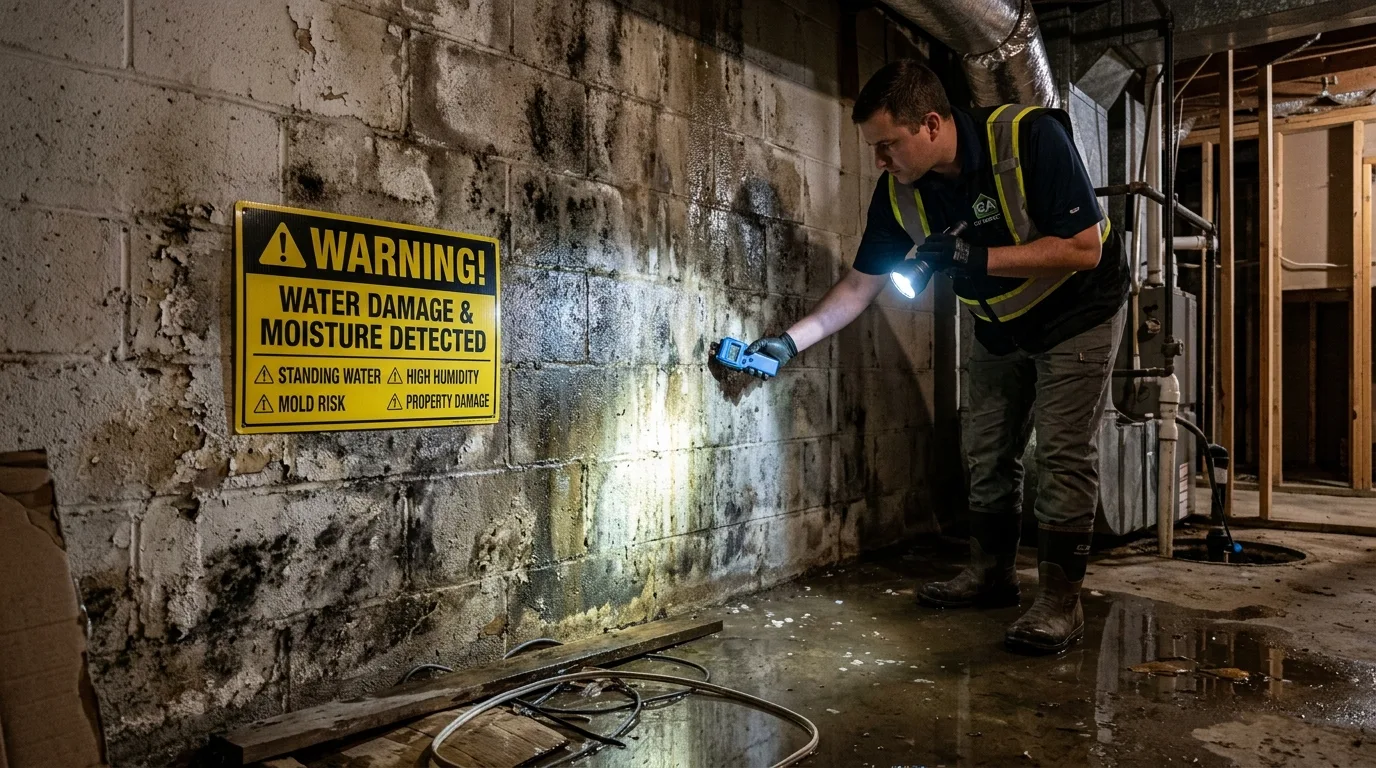
When water is pooling on your floors and spreading through your East Point home, the last thing you want is uncertainty about what’s going to happen next. Many homeowners have never experienced a major water event and have no idea what the emergency water removal process actually looks like, how fast crews should arrive, or what decisions they’ll need to make in the first few hours. This post walks you through the entire emergency water removal process from first call to restoration completion so you know exactly what to expect. In this post, we cover the call process, arrival and assessment, extraction methods, drying setup, and what full restoration looks like.
Emergency Water Removal in East Point — Call Now.
24/7 dispatch across East Point, College Park, Hapeville, Forest Park, and Fulton County. Call (877) 698-1311.
When You Call: The First 10 Minutes
When you call (877) 698-1311 for emergency water removal in East Point, the first call collects key information: your address, the approximate amount of standing water, the water source (if known), whether the water source is still active, and whether the water involves sewage or obvious contamination. This information determines crew size and equipment load.
If the water source is still active — a burst pipe, running appliance, or open drain — you’ll be walked through shutting off the water before the crew arrives. The instructions are straightforward: locate the main shutoff valve (most East Point homes have it at the water meter near the street or at the foundation wall entry), turn it completely clockwise until it stops, and turn off the water heater breaker if applicable.
Do not use standard household fans — they can spread mold spores from contaminated water areas throughout the home. Don’t enter areas where the water may be in contact with electrical outlets or appliances until power to those circuits is confirmed off.
Arrival and Initial Assessment
Our crew arrives at your East Point property and immediately assesses the water source status, water category, and affected area extent. Water category classification — Category 1 (clean), 2 (gray), or 3 (black/sewage) — determines the decontamination protocols required and directly affects the scope and cost of restoration. For properties throughout the Arrowwood Drive neighborhood and near Sumner Park in DeLowe-Connally, the clay soil conditions and older plumbing infrastructure affect the assessment process.
Thermal imaging cameras scan walls, ceilings, and floors to identify moisture in areas not visibly affected — a critical step in East Point’s older homes where pipe routing through wall cavities can carry water far from the visible damage point. This initial thermal scan defines the true scope of the job, which is often larger than visible staining suggests.
Active Water Emergency in East Point?
Call (877) 698-1311 now — we dispatch immediately and handle everything from extraction through full restoration and insurance documentation.
The Extraction Process
Standing water is removed using truck-mounted extraction equipment with significantly greater capacity than consumer wet-vacs. For volumes under 1–2 inches, truck-mounted extractors remove water rapidly. For deeper flooding in lower-level rooms, basements, or crawlspaces, submersible pumps handle high-volume removal before extraction equipment takes over for residual water.
The extraction phase for a typical East Point residential job — a 200–400 sq ft affected area — typically takes 1–3 hours. Larger events, particularly basement flooding events that occur during spring storm season along the Fulton County drainage corridors, can take longer. East Point’s clay soil retains water near foundations, so exterior drainage assessment is sometimes performed alongside interior extraction to understand whether groundwater pressure is maintaining the intrusion.
After bulk extraction, moisture meters verify remaining moisture content in all affected materials. Anything above target dry standard requires the structural drying phase — and in East Point’s humid climate, virtually every water damage job requires this phase because natural evaporation is too slow.
Structural Drying Setup
Industrial air movers and dehumidifiers are positioned according to IICRC S500 structural drying standards. The equipment count is determined by the total cubic footage of air space in the affected area and the moisture load present. In East Point’s ambient humidity conditions, drying plans typically deploy more equipment than equivalent jobs in drier climates because the dehumidifier is working against a higher baseline moisture load in the air.
The drying setup is not a one-time placement — it’s actively managed. Equipment is repositioned daily as the drying front advances through wall cavities and subfloor assemblies. Moisture readings are taken at fixed monitoring points each day and logged. In East Point’s humid climate, achieving IICRC dry standard typically takes 4–7 days for most residential jobs, longer for events with significant hidden moisture or Category 3 contamination.
For jobs requiring mold prevention treatment, EPA-registered antimicrobial agents are applied once affected materials reach dry standard — the point at which mold colonization risk drops below the treatment threshold. See our mold remediation services in East Point for jobs where mold has already developed before we arrive.
Documentation for Your Insurance Claim
Throughout every phase — arrival, extraction, assessment, and drying — our team generates the documentation your insurance claim requires: pre-cleanup photography and video, moisture meter readings, thermal imaging results, category-of-loss documentation, scope-of-work and cost estimate, daily drying logs, and post-drying confirmation readings. This package is formatted for insurance carrier submission and covers the documentation requirements for East Point and Fulton County claims.
For guidance on filing your claim, see our guide on water damage insurance claims in Fulton County. For dedicated claim assistance as part of your restoration, see our insurance claim assistance services in East Point.
Reconstruction: The Final Phase
Once all affected materials have reached IICRC dry standard, reconstruction begins. Drywall that was removed for cavity drying is replaced. Flooring that absorbed Category 2 or 3 water is replaced. Insulation that became contaminated is replaced. The final product is a property that is restored to pre-loss condition — not just dried out, but fully reconstructed. For full service from water extraction through reconstruction, see our water damage restoration services in East Point.
Frequently Asked Questions
How fast does emergency water removal respond in East Point?
Emergency water removal in East Point responds with same-day dispatch 24 hours a day, 7 days a week. Response time to East Point, College Park, Hapeville, and the surrounding Fulton County area is typically 1–3 hours from initial call. During peak spring storm season, higher call volumes can occasionally extend response times — call as early as possible when water events begin.
What does emergency water removal cost in East Point?
Emergency water removal costs depend on the volume of water, affected area size, and water category. Most East Point residential jobs fall in the $1,361–$6,270 range, with the Georgia average at $3,814. For detailed cost information, see our water damage restoration cost guide for East Point.
Do I need to be home during emergency water removal?
You should be present during the initial arrival and assessment so you can make decisions about what’s affected, access all areas of the property, and provide information about the water source. After the initial setup, you don’t need to be present continuously — crews work independently during the drying phase and check in with daily moisture readings and progress updates.
East Point Water Damage Restoration — 24/7 Emergency Service
From emergency extraction through full restoration and insurance documentation. Call (877) 698-1311 for East Point, College Park, Hapeville, Forest Park, and all of Fulton County.
Related: