Burst Pipes in East Point: What to Do When Temperatures Drop
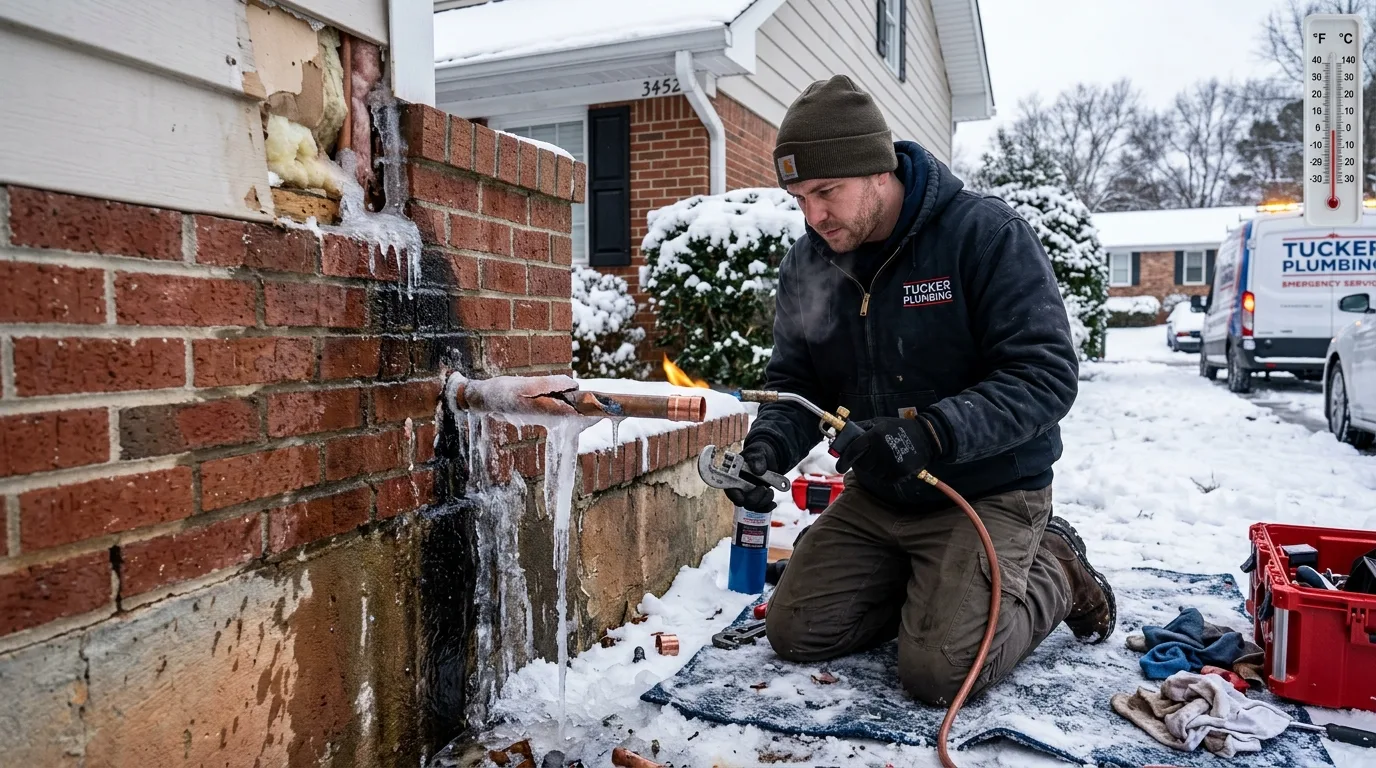
Georgia doesn’t get many hard freezes — but East Point only needs one to put hundreds of gallons of water inside your walls. The freeze-thaw cycles that run through East Point from December through February are responsible for a significant spike in water damage calls every winter, and most of the affected homeowners had no idea their pipes were vulnerable until water was already flowing through their ceilings. This post covers exactly what to do when a pipe bursts, which East Point homes are most at risk, and how to prevent winter pipe failures before they happen. In this post, we cover immediate response steps, East Point’s freeze risk, vulnerable home types, prevention measures, and what the restoration process looks like.
Burst Pipe in East Point? Call Now — 24/7 Emergency Response.
Immediate dispatch to East Point, College Park, Hapeville, Forest Park, and all of Fulton County. Call (877) 698-1311.
What to Do When a Pipe Bursts in East Point
Immediate actions — first 5 minutes:
-
Locate and shut off the main water supply valve. In most East Point homes, this is near the water meter — typically at the foundation wall or near the street. If you don’t know where your main shutoff is, find it before winter, not during an emergency.
-
Turn off the water heater. With no water supply, a water heater running dry can overheat or be damaged.
-
Open cold water faucets to drain water remaining in the pipes and relieve pressure.
-
If water is near electrical panels, outlets, or appliances, stay out of the affected area and shut off the circuit breaker before entering.
-
Call East Point Water Damage Restoration at (877) 698-1311 for immediate dispatch. Document the damage with photos and video before touching anything — this is your insurance documentation.
Do not use a standard household fan to begin drying — this can spread mold spores to unaffected areas. Professional water damage restoration requires industrial dehumidification and air movers positioned according to IICRC standards, not consumer fans aimed at wet floors.
Why East Point’s Freeze-Thaw Cycles Are More Dangerous Than Homeowners Expect
East Point’s climate is classified as humid subtropical — winters are mild by national standards, with January lows averaging 33°F. But “mild” doesn’t mean freeze-proof. The danger isn’t prolonged cold; it’s the freeze-thaw cycling. East Point regularly experiences multi-day stretches in December and January where overnight temperatures drop to 25–30°F and daytime temperatures climb back to the 40s–50s. This cycling creates the exact conditions that crack pipes: the freeze causes ice to expand inside the pipe, and the thaw releases the cracked pipe’s contents.
From a homeowner’s standpoint, the timing is the trap. Pipes freeze overnight — often while families are asleep or away — and the crack develops inside the wall or ceiling. When the ice melts during the day, water begins flowing through the crack. By the time water appears at a ceiling stain or floor puddle, the pipe may have been discharging for hours. East Point’s older housing stock amplifies this risk because pipe routing through exterior walls and unconditioned attic spaces was common in mid-century construction.
Which East Point Homes Are Most Vulnerable
Not all East Point homes carry equal burst-pipe risk. The housing age and construction type are the primary risk factors.
1930s–1960s craftsman bungalows and ranch homes: Common throughout the Colonial Hills and Conley Hills neighborhoods, these homes frequently have copper or galvanized steel supply pipes routed through exterior walls with minimal insulation. Galvanized pipes degrade from the inside out over decades, creating thinner walls that are more susceptible to freeze-crack failure.
Homes with uninsulated pipe segments in attics or crawlspaces: Any pipe segment that runs through an unconditioned space — attic, garage, or unencapsulated crawlspace — is vulnerable. East Point’s crawlspace homes, common throughout Cherry Blossom and DeLowe-Connally, frequently have supply pipes running through the crawlspace without adequate insulation.
Vacant or unoccupied properties: Properties that are unoccupied during cold weather — rental units between tenants, vacation properties — are the highest-risk category because there’s no one present to catch the early signs of a freeze or a pipe failure. If you own a vacant property in East Point during winter months, maintain a minimum interior temperature of 55°F and consider pipe insulation for all vulnerable segments.
Burst Pipe Damage in East Point? Act Fast.
Every hour of standing water increases damage and restoration cost. Call (877) 698-1311 — we respond 24/7 in East Point and Fulton County.
How Burst Pipe Water Damage Spreads
The mechanics of how burst pipe water damage spreads are important to understand — it explains why professional restoration is necessary rather than a DIY towel-and-fan approach. When a pipe cracks inside a wall cavity, water flows down the interior of the wall, saturating insulation and drywall from behind. It then follows gravity and framing members horizontally before dripping to the subfloor or ceiling below. By the time water appears at a visible stain, it has already saturated materials across a much larger area than the stain suggests.
In East Point’s humid subtropical climate, those saturated materials don’t dry on their own in the ambient indoor environment. At 67% average relative humidity, the difference in vapor pressure between wet wall materials and the surrounding air is insufficient to drive rapid evaporation. Without mechanical dehumidification removing water vapor from the air and industrial air movers driving evaporation from wet surfaces, drying can take weeks — during which mold is establishing and structural materials are degrading. See our burst pipe repair and water damage services in East Point for a full overview of the restoration process.
Prevention: How to Reduce Burst Pipe Risk in East Point Winters
The most effective prevention measures for East Point homes are straightforward:
Insulate vulnerable pipe segments: Pipe insulation sleeves from any hardware store cost a few dollars per foot and prevent freeze damage in accessible pipe runs through crawlspaces, garages, and attics.
Maintain indoor temperature above 55°F: Even if you’re leaving for vacation during a cold stretch, keep the heat on at a minimum of 55°F.
Open cabinet doors under sinks on exterior walls: During hard freeze nights, leaving cabinet doors open under kitchen and bathroom sinks on exterior walls allows heated indoor air to warm the pipe cabinet space.
Know your main shutoff: Every adult in your household should know where the main water shutoff is and how to close it. A burst pipe you can stop in 60 seconds is a fraction of the cost of one that runs for hours.
Drip exterior-facing faucets during hard freeze nights: A slow drip (a pencil-width flow) keeps water moving in the supply line, preventing ice from forming in the pipe.
The Burst Pipe Restoration Process
Once the water source is controlled, the restoration process follows established IICRC water damage restoration protocols. See our guide on water damage restoration in East Point for a full step-by-step breakdown. Burst pipe cleanup is Category 1 (clean water from a supply line), which means decontamination is simpler than Category 3 events — but structural drying requirements are identical. Moisture must be verified to IICRC dry standard in all affected wall, floor, and ceiling assemblies before reconstruction.
Frequently Asked Questions
How much does burst pipe water damage cleanup cost in East Point?
Burst pipe cleanup ranges from about $500 for a small, quickly-caught leak to $8,000 or more when the pipe ran for hours and saturated multiple rooms. The Georgia average water damage restoration cost is $3,814. Clean supply-line water (Category 1) costs about $3.50/sq ft to remediate. See our cost guide for water damage restoration in East Point.
Does insurance cover burst pipe damage in East Point?
Yes — burst pipe damage from a sudden and accidental pipe failure is covered by standard homeowner insurance in Georgia. The key documentation requirements are establishing that the event was sudden (not a gradual leak) and completing mitigation promptly. We provide full pre-cleanup documentation as part of every job to support your claim. See our insurance claim assistance services.
What’s the fastest way to prevent frozen pipes in East Point?
The single most effective measure is insulating vulnerable pipe segments — particularly pipes in crawlspaces, exterior walls, and unconditioned attics. Pair that with maintaining indoor temperature above 55°F during cold spells, and you eliminate the majority of burst pipe risk for East Point homes.
Burst Pipe in East Point? Call (877) 698-1311 Now.
24/7 emergency dispatch to East Point, College Park, Forest Park, Riverdale, Union City, and all of Fulton County.
Related: